Snowflake Cloud Data Platform: The Enterprise Solution That Ditches Traditional On‑Prem Data Warehouses
Snowflake Cloud Data Platform: The Enterprise Solution That Ditches Traditional On‑Prem Data Warehouses
Enterprises have long relied on on‑premise data warehouses such as Oracle Exadata, Teradata, or IBM Netezza to power analytics. While those systems once provided performance and control, they now impose high capital costs, limited scalability, and cumbersome maintenance. Snowflake—a pure‑cloud, multi‑cloud data platform—offers a compelling alternative that eliminates the need for costly hardware, reduces operational overhead, and accelerates time‑to‑insight. This article explains why Snowflake is replacing legacy enterprise software, how its architecture delivers real business value, and what organizations should consider when migrating.

Why Traditional Data Warehouses Are Struggling
On‑premise data warehouses were designed for a world where data grew slowly and hardware upgrades happened on multi‑year cycles. Modern analytics demands are dramatically different:
- Explosive data volume: Petabytes of structured and semi‑structured data arrive daily from IoT, clickstreams, and cloud applications.
- Variable workloads: Business users launch ad‑hoc queries while data scientists run large‑scale model training in parallel.
- Speed of innovation: Companies must provision new environments in hours, not weeks.
Legacy appliances lock organizations into fixed compute and storage capacities, leading to either over‑provisioning (wasting money) or under‑provisioning (slowed queries). Additionally, patching firmware, managing disks, and scaling clusters require specialized staff—a burden that distracts IT from strategic initiatives.
Snowflake’s Core Architecture: Separation of Compute and Storage
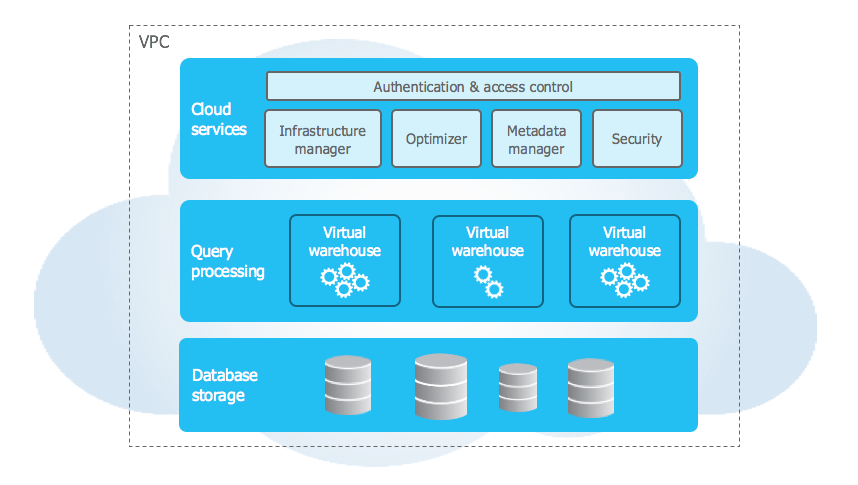
Snowflake’s breakthrough lies in its native separation of compute and storage. Data is stored in a centralized, encrypted repository on cloud object storage (Amazon S3, Azure Blob, or Google Cloud Storage). Compute resources, called virtual warehouses, are provisioned independently and can scale up or down in seconds.
Multi‑Cluster Warehouses
Each virtual warehouse can run multiple clusters simultaneously, automatically routing queries to an idle cluster when concurrency spikes. This eliminates queueing delays without requiring manual intervention. Organizations can assign dedicated warehouses to different business units—finance, marketing, product—and each unit receives isolated performance guarantees.
Data Sharing and Collaboration
Snowflake’s Secure Data Sharing feature enables real‑time data exchange across accounts without copying data. Partners receive a live view of the source tables, which updates instantly as new rows arrive. This capability replaces traditional ETL pipelines and reduces latency from days to seconds.
Key Benefits Over On‑Prem Solutions
Adopting Snowflake translates into tangible business outcomes. Below are the most compelling advantages:
- Zero Capital Expenditure: Pay‑as‑you‑go pricing means no upfront hardware purchases.
- Instant Elasticity: Scale compute up to 100 × within minutes to handle peak loads.
- Unified Governance: Centralized security policies, role‑based access, and automatic data encryption simplify compliance.
- Built‑in Semi‑Structured Support: JSON, Avro, Parquet, and XML can be queried directly with standard SQL.
- Automatic Maintenance: Snowflake handles patches, backups, and performance tuning without user input.
- Cross‑Cloud Flexibility: Deploy workloads on AWS, Azure, or GCP and migrate freely.
Real‑World Use Cases and Success Stories
Enterprises across industries are already leveraging Snowflake to replace legacy stacks. Here are three illustrative examples:
- Financial Services – Capital One: Migrated 25 PB of transaction data from an on‑prem Teradata farm to Snowflake, cutting query latency by 70 % and reducing annual storage costs by $12 M.
- Retail – Walmart: Uses Snowflake to blend POS data, supplier feeds, and web clickstream logs, enabling real‑time inventory optimization that increased sales lift by 3.5 % during holiday peaks.
- Healthcare – Cerner: Consolidates patient records from multiple hospital systems into Snowflake, providing researchers with secure, instantly refreshed datasets for population health studies.
Migration Considerations and Best Practices
Moving from an on‑prem warehouse to Snowflake requires careful planning. Follow these steps to ensure a smooth transition:
- Assess Data Landscape: Catalog all source systems, data volumes, and latency requirements.
- Choose the Right Migration Tool: Snowflake supports native connectors (Snowpipe, Bulk Load), third‑party ETL platforms (Informatica, Talend), and database‑to‑database replication tools.
- Design Virtual Warehouse Sizing: Start with small warehouses for development, then conduct query‑performance testing to size production warehouses appropriately.
- Implement Governance Early: Define roles, masking policies, and row‑level security before loading data.
- Validate Data Fidelity: Run checksum comparisons between source and Snowflake tables to catch transformation errors.
- Train End‑Users: Provide SQL training and introduce Snowflake’s features (time travel, zero‑copy cloning) to analysts.
Future Outlook: Snowflake’s Role in the Data Mesh Era
As organizations adopt a data mesh—where domain teams own their data products—Snowflake’s multi‑cloud, share‑first architecture aligns perfectly. Features such as Snowflake Secure Data Sharing and Data Marketplace enable teams to publish curated data sets as reusable assets, while the platform’s governance framework ensures compliance across the mesh.
Moreover, Snowflake’s recent Snowpark extensions allow developers to write data‑processing logic in Python, Java, or Scala directly inside the warehouse, reducing the need for external processing clusters. This blurs the line between storage, compute, and application logic—an essential capability for next‑generation analytics.
Conclusion
Traditional on‑premise data warehouses are increasingly misaligned with the speed and scale demanded by modern enterprises. Snowflake offers a cloud‑native, elastic, and cost‑effective platform that solves the core pain points of legacy systems while opening new opportunities for data sharing, collaboration, and innovation. By following proven migration practices and embracing Snowflake’s governance and developer tools, organizations can future‑proof their analytics landscape and unlock measurable business value.
